1. Observational Studies:
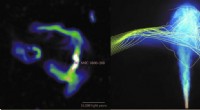
- Radio Telescopes: Astronomers use radio telescopes to map radio emissions originating from black hole jets. The radio jet emission comes from accelerated particles within the jet's plasma.
- X-ray Observations: X-ray emissions can probe the innermost regions of the jet and provide information about the high-energy processes occurring near the black hole.
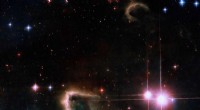
- Optical and Infrared Data: Optical and infrared telescopes help in understanding the optical and infrared properties of the jet and any effects it has on the surrounding medium.
2. Spectroscopic Analysis:
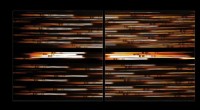
- Emission Lines: Emission lines observed in the spectra of jets are key to understanding the physical properties of the jet material, such as the temperature, density, and velocity.
- Polarization: Polarization properties of the jet emission can shed light on the particle acceleration mechanisms and magnetic field structures within the jet.
3. Variability Studies:
- Monitoring Observations: Variability studies involve closely monitoring jets over various wavelengths to track changes in brightness and structure, giving insights into the dynamical evolution of jets.
- Time Delays: Observations in different bands at different epochs can reveal time delays, which help decipher the location and orientation of jet structures.
4. Theoretical Modelling:
- Magnetohydrodynamic Simulations: Advanced numerical simulations and models based on magnetohydrodynamics help recreate the processes happening near the black hole and predict the dynamics and evolution of jets.
- Radiative Transfer Modelling: Models that include radiative transfer calculations help explain the observed emission from the jet.
5. Multi-wavelength Data Analysis:
- Coordinated Observations: Jet physics can be best understood by combining data from multiple telescopes (radio, X-ray, optical, infrared) as they probe different aspects of jet behaviour.
By meticulously combining data from observations, spectroscopic analysis, variability studies, theoretical modelling, and multi-wavelength analyses, scientists unravel the strange physics behind jets launching from supermassive black holes. This allows them to explore their role in galaxy formation and evolution, study particle acceleration mechanisms in extreme environments, and push the boundaries of our understanding of astrophysics.