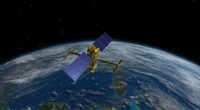
NASA's CubeSat Launch Initiative (CSLI) launched two new educational CubeSats into orbit on June 30, 2023. The CubeSats, named Q-PACE and ATLANTIS, were developed by student teams from the University of Central Florida (UCF) and California State Polytechnic University, Pomona (Cal Poly Pomona).
Q-PACE will study how plasma waves in the Earth's upper atmosphere are generated and evolve. ATLANTIS will study the density and composition of the atmosphere between 80 and 115 kilometers above the Earth's surface. The CubeSats will also test new technologies and materials that could be used in future NASA missions.
Both CubeSats have been successfully deployed into orbit, and they are now undergoing a series of tests to check their systems. Once the tests are complete, the CubeSats will begin their science investigations.
Q-PACE is expected to operate for about one year, while ATLANTIS is expected to operate for about three years. During that time, the CubeSats will collect data that will help scientists better understand the upper atmosphere and how it interacts with the rest of the Earth's atmosphere.
The CubeSat Launch Initiative is a NASA program that provides funding and support to university teams that are developing CubeSats. CubeSats are small, standardized satellites that are typically used for educational and research purposes. The CSLI program is designed to give students hands-on experience in building and operating satellites, and to encourage them to pursue careers in science, technology, engineering, and mathematics (STEM).
The launch of Q-PACE and ATLANTIS is a major milestone for the CSLI program. It is the first time that NASA has launched two CubeSats on the same day, and it demonstrates the growing interest in using CubeSats for educational and research purposes.
What can we expect to learn from Q-PACE and ATLANTIS?
Q-PACE and ATLANTIS will provide scientists with valuable new data about the upper atmosphere. Q-PACE will study how plasma waves are generated and evolve, and ATLANTIS will study the density and composition of the atmosphere. This data will help scientists better understand the upper atmosphere and how it interacts with the rest of the Earth's atmosphere.
How will this data benefit humanity?
This data will help scientists better understand the Earth's climate and how it is changing. The data will also help scientists develop new technologies for weather forecasting and space exploration.
Are there any risks associated with CubeSats?
There are always risks associated with space missions, but the risks associated with CubeSats are relatively low. CubeSats are small and lightweight, and they do not carry any hazardous materials. They are also designed to be very safe, and they have a very low probability of causing any damage to satellites or other structures in orbit.
What happens after Q-PACE and ATLANTIS complete their missions?
After Q-PACE and ATLANTIS complete their missions, they will be de-orbited and will burn up in the Earth's atmosphere. This is a common procedure for CubeSats, and it helps to prevent them from becoming space debris.