Juno's primary science goal is to investigate the interior structure and dynamics of Jupiter, including its water abundance and distribution, the properties of its atmosphere, and the magnetic fields generated by its rapid rotation. To achieve these goals, Juno is equipped with a suite of scientific instruments, including a magnetometer, a microwave radiometer, a visible-light imager, and a suite of spectrometers.
Some specific objectives of Juno's mission include:
Determining Jupiter's interior structure and composition
Studying Jupiter's atmosphere, including its composition, circulation patterns, and cloud structure
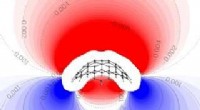
Investigating the generation of Jupiter's powerful magnetic field
Exploring Jupiter's polar magnetosphere and aurora
Observing Jupiter's moons, including the large moons Ganymede, Europa, and Callisto
Through its observations and measurements, Juno aims to provide a better understanding of Jupiter's formation and evolution, and its role in the broader context of the solar system.