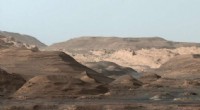
In 2018, scientists using Curiosity made an unexpected discovery. The rover's SAM instrument detected an increase in atmospheric pressure within Gale Crater, where it was exploring. This anomaly was puzzling because the weather on Mars is typically very stable.
Curiosity's team initially attributed the pressure fluctuation to a local event, such as a gust of wind or a small dust devil. However, further observations revealed that the pressure increase was actually a sign of a massive dust storm brewing in the Martian atmosphere.
As Curiosity continued to monitor the situation, it became apparent that the dust storm was rapidly growing and spreading across the planet. Within a matter of days, the storm had engulfed the entire planet, creating a global blackout that blocked sunlight and blanketed the surface with dust.
The dust storm was the largest observed on Mars in several years, and it had a significant impact on Curiosity's mission. The rover was forced to suspend its scientific operations and switch to a safe mode, where it could ride out the storm.
Despite the challenging conditions, Curiosity's team continued to monitor the storm's progress. The small motor on the SAM instrument played a crucial role in collecting data that helped scientists understand the dust storm's behavior and evolution.
By measuring atmospheric pressure and other environmental parameters, Curiosity provided valuable insights into the Martian dust storms and their impact on the planet's climate. The data collected during the storm helped scientists better understand Martian atmospheric dynamics and the role that dust storms play in shaping the planet's environment.
In conclusion, a tiny motor on NASA's Curiosity rover, originally designed for analyzing soil and rock samples, contributed to the identification and monitoring of a massive Martian dust storm. The scientific data gathered during this unexpected event enhanced our understanding of Martian weather and climate, demonstrating the versatility and adaptability of the Curiosity mission.