1. Infrared observations: Both the Spitzer and JWST are infrared telescopes, which means they can detect light that is invisible to the human eye. Infrared light is emitted by cool objects in the universe, such as stars, planets, and galaxies that are forming. This allows JWST to study objects that are too cold or faint to be seen in visible light.
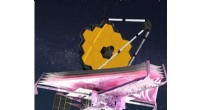
2. High sensitivity: JWST is much more sensitive than Spitzer, allowing it to detect fainter objects and see finer details in the universe. This will allow JWST to study objects that are further away and more difficult to observe.
3. Wide field of view: JWST has a wider field of view than Spitzer, allowing it to cover a larger area of the sky in a single observation. This will allow JWST to survey larger areas of the universe and find rare and unusual objects.
4. Spectroscopy: JWST is equipped with a spectrograph, which allows it to split light into its component wavelengths. This will allow JWST to study the chemical composition of objects in the universe and determine their temperature, density, and other properties.
5. Synergy with other telescopes: JWST will work in conjunction with other telescopes, such as the Hubble Space Telescope and the Atacama Large Millimeter/submillimeter Array (ALMA). This will allow astronomers to combine data from different telescopes to get a more complete picture of the universe.
In summary, while the JWST is not a direct successor to the Spitzer Space Telescope, it will continue Spitzer's legacy by providing new insights into the universe through its infrared observations, high sensitivity, wide field of view, spectroscopy, and synergy with other telescopes.