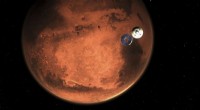
Thin Atmosphere: Mars has a very thin atmosphere, with a surface pressure of only about 1% of Earth's. This means that helicopters have much less air to generate lift, making it challenging to achieve powered flight. Conventional helicopters designed for Earth's atmosphere would not be able to fly in Martian conditions.
Low Gravity: Mars' gravity is only about one-third of Earth's. This means that helicopters experience less downforce, making it more challenging to maintain stability and control.
Extreme Temperatures: Mars has a very cold surface temperature, with the average temperature being around -62 degrees Celsius. This extreme cold can affect the performance of helicopter components and systems, such as the batteries, motors, and sensors.
Unpredictable Weather: Martian weather can be unpredictable and challenging. Dust storms and wind gusts can reach high speeds, which can make it dangerous to fly a helicopter.
Landing Challenges: Landing on Mars is a complex and risky maneuver, and it is especially challenging for a helicopter. The terrain on Mars is rugged, with many obstacles, and the thin atmosphere provides less aerodynamic drag to slow down the descent.
Despite all these challenges, the NASA Ingenuity Helicopter was successfully able to fly on Mars in April 2021, demonstrating the feasibility of powered flight in Martian conditions. This historic achievement opens up the possibility of using helicopters for future Mars missions, such as conducting aerial reconnaissance, delivering payloads, or providing support for human explorers.