1.Target Star Selection:
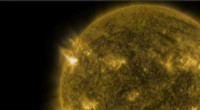
- Astronomers identify Sun-like stars (spectral type G, K, or M) that are within a certain distance from Earth to increase the chances of detecting Earth-sized planets within their habitable zones.
2.Transit Method:
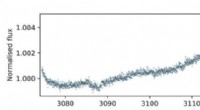
- The transit method involves observing a slight dip in the brightness of a star when an object, such as a planet, passes in front of it (transits) as seen from Earth's perspective.
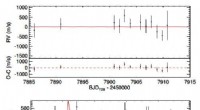
3.Radial Velocity Method:
- This technique measures subtle changes in the star's motion due to the gravitational influence of a planet orbiting it. If the changes are consistent with the presence of an Earth-sized planet, it can indicate a potential exoplanet.
4.High-Resolution Imaging:
- With advanced telescopes like the Hubble Space Telescope or future missions like the James Webb Space Telescope, astronomers can directly image exoplanets, albeit very few.
5.Habitability Assessment:
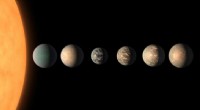
- Once exoplanets are detected, astronomers evaluate their potential habitability. Factors like the planet's size, distance from its host star, and characteristics of the star itself are considered.
6.Atmospheric Analysis:
- Studying the atmosphere of exoplanets using tools like spectroscopy helps identify the presence of essential elements like water vapor and molecules relevant to life.
7.Additional Observations:
- Multiple observations and long-term monitoring are crucial for confirming the presence of an exoplanet and gathering data on its characteristics, including its orbit and composition.
8.Candidate Validation:
- As more data is gathered, astronomers collaborate to validate exoplanet candidates and determine their potential for hosting liquid water and supporting life as we know it.
9.Future Missions:
- Upcoming space missions like the Transiting Exoplanet Survey Satellite (TESS), PLATO (PLAnetary Transits and Oscillations of stars), and future space telescopes aim to further enhance our ability to detect Earth 2.0 candidates and characterize their atmospheres.
Remember, finding an Earth 2.0 is challenging and requires continuous observational efforts and technological advancements. While we have identified thousands of exoplanets, finding a true Earth analog remains an exciting and ongoing endeavor.