Black holes are regions of space with such strong gravitational forces that nothing, not even light, can escape from them. This makes them difficult to study, as no information about the interior of a black hole can be directly observed from the outside.
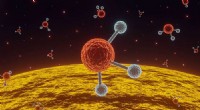
However, Dr. Spiropulu's team was able to use the principles of quantum mechanics to simulate the behavior of particles near the edge of a black hole, known as the event horizon. They did this by creating a quantum computer simulation of a particle undergoing gravitational collapse.
The simulation revealed that as the particle falls towards the black hole, it experiences extreme tidal forces that stretch and compress it. These forces become so strong that the particle's quantum properties begin to emerge, causing it to behave in unexpected ways.
To interpret the complex data from the simulation, Dr. Spiropulu's team turned to machine learning techniques. They developed algorithms that could identify and classify the different physical processes occurring near the black hole.
Using these tools, the researchers were able to gain valuable insights into the behavior of matter in extreme gravitational environments. They discovered that the particle undergoes a phase transition as it approaches the event horizon, changing from a normal state to a quantum state.
This research represents a breakthrough in our understanding of black holes and the fundamental nature of gravity. It opens up new possibilities for studying the behavior of matter under extreme conditions and exploring the mysteries that lie hidden within black holes.