1. Primordial Magnetic Field: One suggestion is that the cosmic magnetic field may have its origin in the early universe. During the Big Bang, slight asymmetries or fluctuations in the distribution of charged particles may have resulted in the generation of a primordial magnetic field. This initial field could have been amplified through various processes as the universe expanded and evolved.
2. Dynamo Effect: Similar to the dynamo processes observed in Earth's core, it's possible that a large-scale dynamo mechanism occurred in the early universe. This involves the interplay of rotating, electrically conducting cosmic plasma and the stretching and folding of magnetic field lines. Over time, the magnetic field could have been amplified through successive rotations and convection.
3. Galactic Dynamo: Galaxies, including our Milky Way, are known to have large-scale magnetic fields. These fields are believed to be generated by dynamo processes that occur within the galaxies. It's possible that the galactic magnetic fields also contribute to the overall cosmic magnetic field through mergers, interactions, and collisions between galaxies.
4. Magnetic Reconnection: In cosmic environments such as galaxy clusters or regions where different streams of plasma interact, magnetic reconnection events can occur. During reconnection, magnetic field lines break and reconnect, releasing stored magnetic energy. This can generate intricate magnetic structures and contribute to the complexity of the cosmic magnetic field.
5. Astrophysical Jets and Outflows: Powerful astrophysical jets and outflows from objects like active galactic nuclei or supernovae can carry magnetic field configurations into the surrounding interstellar and intergalactic medium. As these ejecta propagate, they may seed and amplify magnetic fields on large scales.
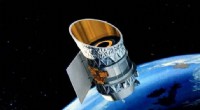
Currently, observations of cosmic magnetic fields are challenging due to their diffuse and complex nature. Techniques such as Faraday rotation measurements and radio observations of polarized light are employed to study these fields. Space missions like the Planck satellite have also contributed valuable data on the cosmic microwave background, providing insights into the properties of the early universe.
By combining observational data, theoretical models, and simulations, scientists aim to gain a deeper understanding of how the cosmic magnetic field originated and evolved over cosmic time. Ongoing research in astrophysics and cosmology continues to shed light on this intriguing aspect of the universe.