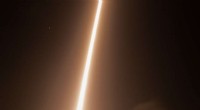
1. Gravitational Lensing: The image could be the result of gravitational lensing, where the gravity of a massive object bends light from a distant object, distorting its appearance.
2. Lens Flare: Some suggest the object could be a lens flare or artifact caused by the telescope's optics or instruments, such as reflections or scattered light within the telescope.
3. Diffraction Spike: Others speculate it might be a diffraction spike, which occurs when light bends around the edge of an object in the telescope's optical system, creating bright streaks.
4. Supernova Remnant: The object could be a supernova remnant, the expanding debris left behind after a massive star explodes.
5. Quasar or Active Galactic Nucleus: It might be an extremely distant quasar or an active galactic nucleus (AGN), powered by a supermassive black hole at the center of a galaxy.
6. Galaxy Formation: Some theorize the object is a rare glimpse of a galaxy in its early stages of formation, showcasing the dynamic processes that shape galaxies over time.
7. Extraterrestrial Megastructures: A small group of people also suggested the possibility of extraterrestrial megastructures, hypothetical large-scale structures built by advanced civilizations, though there is no scientific evidence supporting this idea.
It's important to note that these are all speculations, and the true nature of the object remains a mystery. Astronomers and scientists will continue to analyze the data from the James Webb Telescope and other observations to better understand what this intriguing celestial object might be.