In the vast expanse of our solar system lies a hidden treasure trove of knowledge, waiting to be discovered. Among these cosmic gems are the enigmatic Trojan asteroids, remnants from the early days of planetary formation. Their secrets have remained shrouded in mystery, but NASA's Lucy mission aims to change that.
Lucy's Journey: A Six-Year Odyssey
Launched in October 2021, the Lucy spacecraft is embarking on an epic six-year journey to explore the Trojan asteroids, a group of celestial bodies that share Jupiter's orbit around the sun. These asteroids are believed to be remnants of the building blocks that formed the planets in our solar system, making them invaluable time capsules of the past.
Three Dust Specks: A Window into the Unknown
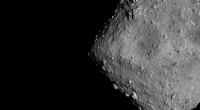
As Lucy embarks on its mission, it will encounter three of these Trojan asteroids: Polymele, Eurybates, and Queta. These worlds, ranging in size from 22 to 104 kilometers, are tiny compared to other celestial bodies explored by spacecraft before.
However, their small size doesn't diminish their significance. Scientists believe that these three dust specks hold crucial clues to understanding the formation and evolution of our solar system. By studying the composition, structure, and history of these asteroids, Lucy will provide invaluable insights into the early stages of planetary development.
Ancient Relics of the Early Solar System
The Trojans are believed to be primordial leftover material from the protoplanetary disk, the swirling cloud of gas and dust from which the solar system formed. They offer a glimpse into a distant past, allowing scientists to study the raw materials that eventually gave rise to the planets we know today.
Lucy's encounters with these asteroids will be a journey through time, helping scientists unravel the mysteries of our solar system's origins. The mission will investigate the geologic processes that shaped these worlds, search for signs of past volcanic activity, and analyze the composition of their surfaces to better understand the early conditions that led to the formation of the planets.
A Quest for Knowledge and Discovery
The Lucy mission is about much more than just exploring distant asteroids; it's about unraveling the interconnected history of our solar system and gaining a deeper understanding of our place in the universe. By studying these three dust specks, Lucy is providing scientists with a unique opportunity to peer into the past and bring to light the secrets that have remained hidden for billions of years.
As Lucy continues its journey, it carries with it the hopes and dreams of scientists and space enthusiasts alike. Its mission is a symbol of our insatiable curiosity about the universe and our unwavering quest for knowledge and discovery.