1. Solar Nebular Theory: The most widely accepted theory is the Nebular Hypothesis or the Solar Nebular Theory. This theory proposes that the solar system formed from a vast, rotating cloud of gas and dust known as the solar nebula.
2. Gravitational Collapse: Triggered by some external event, the solar nebula began to contract under its gravity. As it collapsed, the cloud started spinning faster due to the conservation of angular momentum.
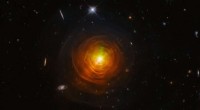
3. Protostar Formation: At the center of the collapsing nebula, a dense region formed—the protostar—which would eventually become the Sun. The outer, cooler regions continued to rotate and flatten, forming a disk-like structure.
4. Planetary Disk: This flattened disk of gas and dust, known as the protoplanetary disk, extended beyond the orbit of the present-day Pluto. It consisted of various elements and compounds that would form the planets and other celestial bodies.
5. Planetesimal Formation: Within the protoplanetary disk, solid particles began to collide and stick together, forming small bodies called planetesimals. These planetesimals grew larger through further collisions and accretion.
6. Differentiation and Accretion: As planetesimals grew in size, they experienced internal heating and differentiation. Heavy elements sank to their centers, forming cores, while lighter elements remained closer to the surface. This process led to the formation of planetary bodies.
7. Formation of Planets and Satellites: Over millions of years, the largest planetesimals continued to grow, sweeping up smaller bodies and debris through gravitational attraction. Eventually, these planetesimals reached sufficient size to become planets. The smaller bodies that orbited the planets formed their respective moons or satellites.
8. Remaining Fragments: The leftover debris from the protoplanetary disk continued to orbit the Sun. Some of this material formed asteroids, comets, and other small celestial objects. The Ryugu asteroid is believed to be a fragment of this primordial disk that survived the early solar system's turbulent formative period.
So, the Ryugu asteroid, along with other celestial objects in our solar system, provides essential clues to unravel the history of the solar system's formation. As scientists continue to study the composition and characteristics of the Ryugu asteroid and other remnants of the early solar system, we gain valuable insights into the cosmic processes that shaped our place in the universe.