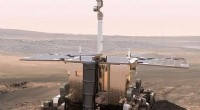
1. Advancements in Space Exploration Technology: To explore Venus and search for life, we would need major advancements in space exploration technology, including more resilient and heat-resistant spacecraft, as well as advanced instruments and probes capable of withstanding the extreme environment.
2. Exploration of the Upper Atmosphere: Venus' atmosphere contains regions with more moderate temperatures and pressures than those at the surface. The upper atmosphere could be explored using balloons or airships to search for microbial life adapted to these conditions.
3. Search for Biosignatures: Finding life on Venus would require the detection of biosignatures—chemical or physical indicators that suggest the presence of living organisms. These biosignatures could include the detection of certain gases or molecules, such as methane, ammonia, or oxygen, that could be evidence of biological processes.
4. Exploration of Possible Habitats: Some scientists speculate about the possibility of habitable environments within the clouds of Venus or in potential subsurface water reservoirs. Exploring these environments for signs of life would require specialized missions and sampling techniques.
5. Analysis of Venus' Geological History: Studying the geological history of Venus may provide insights into past conditions that could have been more favorable for life. Exploring ancient terrains or potential water-rich regions could help uncover evidence of past habitable environments.
6. International Collaboration: Given the complexity and challenges of exploring Venus, international collaboration would likely be essential. Collaborative efforts can pool resources, expertise, and technologies, increasing the chances of success in such a challenging mission.
7. Long-Term Commitment to Exploration: Finding life on Venus, if it exists, might take time. It would require sustained exploration efforts, patience, and ongoing research to thoroughly investigate the planet and search for signs of life.
Overall, finding life on Venus would be a remarkable achievement that would reshape our understanding of planetary habitability and the potential for life in extreme environments. It would require significant scientific and technological advancements, as well as unwavering commitment to space exploration and research.