Neutron stars are the collapsed cores of massive stars that have exhausted their nuclear fuel. They are extremely dense, with masses of about 1.4 solar masses and radii of only about 10 kilometers. This means that neutron stars have a density of about 10^14 grams per cubic centimeter, which is about the same density as an atomic nucleus.
The matter inside neutron stars is so dense that it is in a state that is not found anywhere else in the universe. This state of matter is called neutron matter, and it is composed of neutrons, protons, and electrons. The properties of neutron matter are not well understood, and they are the subject of much research.
Studying neutron stars can help us to understand the equation of state of neutron matter. The equation of state of a material describes how the pressure, volume, and temperature of the material are related. For neutron matter, the equation of state is particularly important because it determines the structure and properties of neutron stars.
The Mystery of Dark Matter
Dark matter is a hypothetical form of matter that is thought to make up about 27% of the universe. Dark matter is invisible, and it does not interact with light or any other form of electromagnetic radiation. The existence of dark matter is inferred from its gravitational effects on visible matter.
The nature of dark matter is one of the biggest mysteries in physics. There are many different theories about what dark matter might be, but there is no consensus on which theory is correct.
Neutron stars could play a role in solving the mystery of dark matter. If dark matter is made up of weakly interacting massive particles (WIMPs), then neutron stars could provide a way to detect WIMPs. WIMPs could scatter off of neutrons inside neutron stars, and this could produce a signal that could be detected by telescopes.
The Origin of the Universe
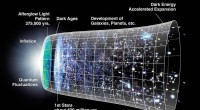
The Big Bang theory is the leading theory about the origin of the universe. The Big Bang theory states that the universe began about 13.8 billion years ago in a hot, dense state. The universe then expanded and cooled, and galaxies and stars formed.
There are many questions about the Big Bang theory that remain unanswered. One question is what caused the Big Bang. Another question is what happened before the Big Bang.
Neutron stars could provide clues to the answers to these questions. Neutron stars are the oldest objects in the universe, and they contain information about the early universe. By studying neutron stars, we can learn more about the conditions in the early universe and what may have caused the Big Bang.