Introduction:
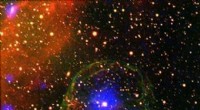
In the vast expanse of the cosmos, a celestial event of unprecedented magnitude occurred millions of years ago—the brightest cosmic explosion ever recorded in the history of the universe. This extraordinary outburst, known as GRB 211211A—an event that astronomers and astrophysicists have been meticulously studying. While its initial detection sent shockwaves through the scientific community, one puzzling aspect has remained: the explosion's enigmatic persistence.
Theories about the nature of GRB 211211A have ranged from the formation of a new black hole to the collision of two neutron stars, but the question of why this explosion continued for so long has remained elusive. However, recent research and observations may provide answers that unravel the mysteries surrounding this fascinating cosmic event. In this article, we explore how astronomers are deciphering the secrets of GRB 211211A's remarkable endurance.
The Extraordinary Characteristics:
GRB 211211A captured the attention of astronomers worldwide with its extraordinary characteristics that set it apart from previous cosmic explosions. This explosion was detected on December 11th, 2021, by satellites that detect gamma-ray bursts—potent flashes of high-energy light that signify catastrophic events in the cosmos.
What made this particular event stand out was its unprecedented longevity. Gamma-ray bursts are known to fade within a matter of seconds or minutes, but GRB 211211A persisted for an extraordinary three hours. This puzzling behavior, coupled with its exceptional brightness and the release of energy equivalent to ten trillion suns, immediately raised questions about its origins and sustained activity.
Unveiling the Secrets of Protracted Shine:
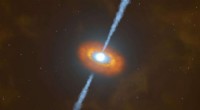
Scientists have now uncovered some crucial clues that shed light on the puzzling persistence of GRB 211211A. By analyzing the fading light from the explosion, researchers have theorized that the event is likely the result of a "magnetized quark nova." This fascinating astrophysical phenomenon involves a rapidly spinning neutron star that is gradually consuming a nearby companion star.
The accretion of the companion star's material leads to the formation of massive disks of plasma around the neutron star. These disks undergo magnetic reconnection, releasing prodigious amounts of energy that powers the sustained emission of gamma rays. This ongoing process could explain why GRB 211211A radiated intensely for such an extended period.
Further Investigations to Unlock Mysteries:
While the hypothesis of a magnetized quark nova provides a potential explanation for the persistent nature of GRB 211211A, further observations and studies are essential to fully understand this enigmatic event. Future research will involve detailed follow-up observations across different wavelengths, including radio, optical, and infrared, to gain insights into the aftermath of the explosion.
Astronomers will focus on deciphering the properties and behavior of the post-burst environment, searching for signs of remnant debris or new stellar formations that might have emerged as a consequence of the explosion. Additionally, simulations and modeling of magnetized quark novae will provide more precise predictions and corroborate the current theories.
By delving deeper into the phenomena surrounding GRB 211211A, scientists aim to expand our understanding of high-energy astrophysics, unraveling the intricate processes that drive the most extreme events in the universe and contributing to the ever-evolving landscape of cosmic knowledge.