Solar gravitational lenses are ideal for studying black holes because they can provide significantly magnified views of these objects. This can allow scientists to study the properties of black holes in much greater detail than is possible with traditional telescopes. For example, Solar gravitational lenses could observe the event horizon of a black hole, the point of no return for anything that enters.
Neutron Stars
Solar gravitational lenses could provide valuable information about neutron stars, which are the collapsed cores of massive stars. Neutron stars are extremely dense objects and can only be studied in detail if it is possible to get close. A Solar gravitational lens could provide the necessary magnification to allow close observations without risk. Scientists could learn more about the structure, composition, and behavior of neutron stars.
Supernovae
Solar gravitational lenses could also observe supernovae, the massive explosions that mark the end of a star's life. Supernovae are extremely energetic events, but their distance makes it difficult to study them in detail. Solar gravitational lenses could magnify the light from supernovae, allowing scientists to study their physics and evolution.
Exoplanets
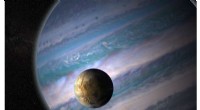
Solar gravitational lenses could be used to detect and study exoplanets, planets that orbit stars other than the Sun. Exoplanets are challenging to study because they are very small and faint compared to their host stars. Solar gravitational lenses could provide enough magnification to allow scientists to study the properties of exoplanets, including their size, mass, and composition.
Gravitational Waves
Finally, solar gravitational lenses could detect and study gravitational waves. Gravitational waves are ripples in spacetime caused by the acceleration of massive objects. They are predicted by general relativity but have never been directly observed. Solar gravitational lenses could magnify the gravitational waves from distant events, such as the merger of two black holes, making it possible to finally detect and study these waves.