Carbon Dioxide (CO2):
- Non-Biological Production: While CO2 can be produced through non-biological processes, such as volcanic eruptions and outgassing, its presence in significant quantities in an exoplanet's atmosphere can be a sign of biological activity.
- Biological Production: CO2 is a byproduct of cellular respiration, a fundamental process in living organisms. If an exoplanet's atmosphere shows a CO2 concentration that cannot be explained solely by geological processes, it could suggest the presence of organisms producing the gas.
Methane (CH4):
- Short Atmospheric Lifetime: Methane is a relatively short-lived gas in planetary atmospheres, with a lifetime of a few hundred years. This means that if methane is detected in an exoplanet's atmosphere, it must be constantly replenished.
- Biological Production: Methane is produced by various biological processes, such as the breakdown of organic matter by microorganisms like methanogens. The consistent presence of methane in an exoplanet's atmosphere could indicate the ongoing production of the gas by living organisms.
Assessing Habitability:
- Habitable Zone: The detection of CO2 and CH4 in an exoplanet's atmosphere is often considered in the context of the planet's position within its star's habitable zone – the region where conditions may allow liquid water to exist on the surface.
- Greenhouse Effect: Both CO2 and CH4 are greenhouse gases, meaning they can trap heat in the atmosphere. Their presence can contribute to warming the exoplanet's surface, making it more hospitable for liquid water.
Combining Biosignatures:
- Multiple Biosignatures: The presence of multiple biosignature gases, such as CO2 and CH4, strengthens the case for the possibility of life on an exoplanet.
- False Positives: While detecting these gases individually can sometimes be attributed to non-biological processes, finding them together reduces the likelihood of false positives and increases the confidence in the potential presence of life.
Advancements in Technology:
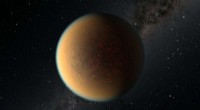
- Exoplanet Atmospheres: With the development of powerful telescopes and instruments, astronomers are now better equipped to study the atmospheres of exoplanets, enabling the detection of specific gases and molecules.
- Future Missions: Upcoming space missions, such as the James Webb Space Telescope (JWST) and future space telescopes, promise to significantly enhance our ability to analyze the composition and chemistry of exoplanet atmospheres, providing more detailed insights into their potential habitability and the presence of biosignatures.
Overall, the detection of CO2 and CH4 in an exoplanet's atmosphere offers tantalizing hints of the potential for life beyond Earth. However, it's crucial to note that these discoveries alone do not definitively prove the existence of life; further observations and comprehensive analyses are necessary to confirm the presence of extraterrestrial life.