1. Wind Tunnel Tests:
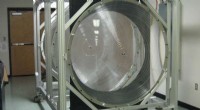
- Scientists constructed a scaled model of the Tianwen-1 parachute system.
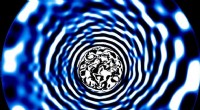
- The model was placed in a wind tunnel, which simulates the Martian atmospheric conditions.
- Pressure sensors, strain gauges, and high-speed cameras were used to gather data on the parachute's shape, aerodynamic forces, and stability.
- These tests provided essential information about the parachute's performance under different flow conditions.
2. Computational Fluid Dynamics (CFD) Simulations:
- Scientists used CFD software to simulate the airflow around the parachute.
- Advanced mathematical models and computer simulations allowed them to study the complex interactions between the parachute and the Martian atmosphere.
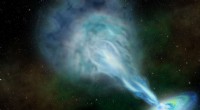
- CFD helped visualize the flow patterns, pressure distributions, and aerodynamic forces acting on the parachute.
3. Flight Data Analysis:
- During the descent of the Tianwen-1 lander, telemetry data was transmitted back to Earth.
- This data included measurements from accelerometers, gyroscopes, and other sensors attached to the parachute system.
- Scientists analyzed this flight data to track the parachute's trajectory, descent rate, and dynamic behavior during deployment and inflation.
4. Post-Flight Analysis:
- After the successful landing, scientists recovered the Tianwen-1 parachute from the Martian surface.
- This allowed them to examine the parachute's condition, analyze any damage, and compare it with the pre-flight simulations and analyses.
By combining experimental and computational approaches, scientists obtained a comprehensive understanding of the aerodynamic characteristics of the Tianwen-1 Mars parachute. This analysis enabled them to verify the parachute's design, evaluate its performance, and ensure its successful deployment during the critical mission phase of landing on Mars.