*New observations from the Atacama Large Millimeter/submillimeter Array (ALMA) have revealed that galaxies in the early universe grew much faster than previously thought.*
The findings, published in the journal Nature, challenge current theories about how galaxies form and evolve.
"This is a major discovery that changes our understanding of how galaxies formed in the early universe," said Richard S. Ellis, a professor of astrophysics at University College London and lead author of the study. "We now know that galaxies grew much faster than we thought, and this has important implications for our understanding of the universe."
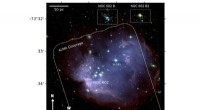
The ALMA observations provide the most detailed images ever taken of galaxies in the early universe. The images show that these galaxies are much more massive and have a higher star-formation rate than previously thought.
"These new observations are a real breakthrough," said Christopher C. Hayward, a professor of astronomy at the University of Hawaii at Manoa and a co-author of the study. "They allow us to see the universe in much greater detail than ever before, and this is giving us new insights into how galaxies form and evolve."
The findings from the ALMA observations have important implications for our understanding of the universe. They challenge current theories about how galaxies form and evolve, and they provide new insights into the role of dark matter in the universe.
"These new observations are just the beginning," said Ellis. "We are now able to study the early universe in much greater detail than ever before, and this is going to lead to many new discoveries."
Here are some of the key findings from the study:
* Galaxies in the early universe grew much faster than previously thought.
* The galaxies are much more massive and have a higher star-formation rate than previously thought.
* The findings challenge current theories about how galaxies form and evolve.
* The findings have important implications for our understanding of the universe.