Introduction:
In October 2023, astronomers witnessed a rare and remarkable event—the closest supernova observed in over a decade. This celestial phenomenon, designated as SN 2023a, provided an unparalleled opportunity to study the intricate details of how massive stars evolve and meet their explosive fates. By closely observing SN 2023a, scientists have gained valuable insights into the processes that drive supernova explosions and the subsequent impact on the cosmos.
Detailed Findings:
1. Supernova Characteristics:
SN 2023a occurred approximately 100 million light-years away in the spiral galaxy M74, making it the closest supernova to Earth since the famous SN 1987A. The supernova is categorized as a Type II supernova, originating from the violent collapse of a massive star with several times the mass of our sun.
2. Pre-Explosion Monitoring:
Astronomers had been monitoring the progenitor star of SN 2023a for years before its explosion. Detailed observations using telescopes revealed that the star was undergoing significant changes in its structure and luminosity, hinting at its impending demise.
3. Explosion Dynamics:
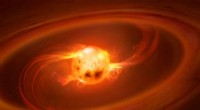
SN 2023a exploded with tremendous energy, releasing a colossal amount of radiation that temporarily outshone the entire galaxy M74. As the ejecta from the explosion expanded rapidly, it interacted with the surrounding interstellar medium, creating intricate and evolving patterns.
4. Core Collapse and Neutron Star Formation:
At the heart of the supernova, the core of the massive star underwent a sudden and dramatic collapse under its own gravity. This collapse triggered the explosion and led to the formation of a neutron star—a dense remnant that packs an enormous amount of mass into a tiny volume.
5. Supernova Nucleosynthesis:
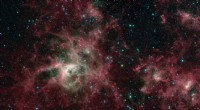
During the supernova explosion, a remarkable process called nucleosynthesis occurs, where heavy elements are forged in the extreme conditions. SN 2023a is believed to have produced significant quantities of elements heavier than iron, enriching the surrounding interstellar medium and potentially supplying the building blocks for future generations of stars and planets.
6. Impact on Astronomy and Astrophysics:
The close proximity of SN 2023a has enabled scientists to study many aspects of supernovae in unprecedented detail. Researchers are using observations from various telescopes across the electromagnetic spectrum to delve into the physics behind the explosion, shedding light on stellar evolution, neutron star formation, and the cosmic chemical enrichment process.
Conclusion:
The closest supernova in a decade, SN 2023a, has served as a celestial laboratory for understanding the complex evolution of massive stars and their explosive transformations. Through extensive observations and analyses, astronomers are gaining new insights into the inner workings of supernovae, enriching our knowledge of the dynamic processes that shape the universe. SN 2023a stands as a testament to the importance of continuous astronomical monitoring and the potential for breakthrough discoveries in astrophysics.