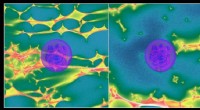
In a recent study, astronomers used computer simulations to investigate how supernovae shape debris clouds. The simulations showed that the properties of the debris cloud, such as its size, shape, and density, depend on a variety of factors, including the mass and energy of the supernova, the presence of a companion star, and the environment in which the supernova occurs.
The simulations revealed that supernovae that occur in dense environments, such as star clusters, produce debris clouds that are more compact and denser than those that occur in less dense environments. This is because the dense environment helps to confine the ejecta from the supernova, preventing it from expanding as quickly.
The simulations also showed that supernovae that have a companion star produce debris clouds that are more asymmetric than those that occur without a companion. This is because the companion star can gravitationally affect the ejecta from the supernova, causing it to be distributed unevenly.
The findings of this study provide new insights into the formation and evolution of debris clouds around supernovae. These clouds can play an important role in the chemical enrichment of the galaxy, as they can release heavy elements into the interstellar medium. They can also be a source of dust, which can help to form new stars and planets.
By understanding how supernovae shape debris clouds, astronomers can gain a better understanding of the processes that govern the death of stars and the birth of new ones.