1. Stellar Nebula:
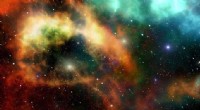
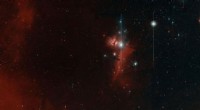
- Planets form within vast clouds of gas and dust known as stellar nebulae.
- These nebulae are primarily composed of hydrogen and helium, but they also contain heavier elements.
2. Gravitational Collapse:
- Gravity causes the nebula to start collapsing under its own mass.
- The center of the collapsing cloud becomes denser, forming a protostar, while the surrounding material flattens into a rotating disk.
3. Accretion and Disk Formation:
- Dust particles within the disk collide and stick together due to electrostatic forces and gravity. These particles grow into larger bodies called planetesimals.
- As planetesimals collide and merge, they form larger and larger objects through a process called accretion.
4. Embryo Formation:
- Over time, some planetesimals become dominant in their orbits, sweeping up most of the surrounding debris.
- These dominant planetesimals grow into embryo planets or protoplanets.
5. Core Formation:
- Within protoplanets, gravity pulls heavier elements toward their centers, leading to the formation of a dense core.
- This core continues to grow as more material accumulates on it.
6. Atmosphere Formation:
- As the protoplanet grows in size, its gravity becomes strong enough to hold onto gases like hydrogen and helium.
- These gases form a primitive atmosphere around the planet.
7. Runaway Accretion and Differentiation:
- As protoplanets grow larger, their gravitational pull increases, leading to runaway accretion where material is rapidly accumulated.
- The increasing heat and pressure within the protoplanet cause differentiation, leading to the formation of distinct layers such as the core, mantle, and crust.
8. Planetary Growth:
- The growth of planets continues through further collisions and mergers.
- Some protoplanets may eventually collide and merge to form larger planets.
9. Clearing the Neighborhood:
- As planets form, they start clearing their orbits by ejecting or incorporating nearby objects, including planetesimals and other protoplanets.
10. Final Formation:
- Over millions to billions of years, the protoplanets evolve into fully formed planets with distinct characteristics such as size, composition, orbital properties, and geological features.
- The final formation of planets depends on various factors, including their distance from the central star, the composition of the surrounding disk, and the gravitational interactions within the system.
It's important to note that planet formation is not a linear process and can vary depending on the specific conditions of each system.