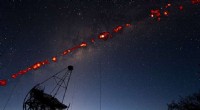
The Deep Space Network (DSN): The DSN is a global network of radio telescopes that NASA uses to communicate with and track spacecraft. The DSN consists of three complexes located in California, Spain, and Australia. Each complex has multiple antennas, and the network can track multiple spacecraft simultaneously.
The Spacecraft Tracking and Data Acquisition Network (STDN): The STDN is a network of ground stations that NASA uses to track and receive data from spacecraft. The STDN consists of stations located in the United States, Canada, Europe, South America, and Australia.
The Near Earth Network (NEN): The NEN is a network of ground stations that NASA uses to track and receive data from spacecraft in low Earth orbit. The NEN consists of stations located in the United States, Canada, Europe, South America, and Australia.
The Lunar Reconnaissance Orbiter (LRO): The LRO is a satellite that NASA launched in 2009 to map the Moon's surface. The LRO carries a variety of instruments that can be used to track lunar missions and monitor the lunar environment.
These tracking technologies allow NASA to monitor the location and status of lunar missions in real time. This information is essential for mission planning and for ensuring the safety of astronauts and spacecraft.
In addition to these technologies, NASA also uses a variety of other tools to track lunar missions, including:
Mission control centers: Mission control centers are where NASA mission managers and engineers monitor and control lunar missions. Mission control centers are typically located at NASA's mission control center in Houston, Texas, or at the Jet Propulsion Laboratory in Pasadena, California.
Flight simulators: Flight simulators are used to train astronauts for lunar missions. Flight simulators can simulate the conditions of space and the challenges of lunar missions.
Wind tunnels: Wind tunnels are used to test spacecraft and equipment for lunar missions. Wind tunnels can simulate the conditions of space and the forces that spacecraft and equipment will experience during a lunar mission.
These tools allow NASA to prepare for lunar missions and to ensure that they are successful.