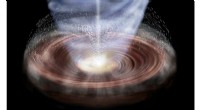
The simulation also shows that black holes can have a significant impact on the evolution of galaxies. By releasing energy into their surroundings, black holes can heat gas and dust, causing it to form new stars. Black holes can also disrupt the orbits of stars and galaxies, leading to the formation of new structures.
The new simulation is the most comprehensive of its kind to date. It includes data from over 100,000 galaxies, and it simulates the evolution of black holes over a period of 13 billion years. The results of the simulation provide new insights into the role of black holes in the universe, and they will help astronomers to better understand how galaxies form and evolve.
Key findings of the simulation:
* Black holes can grow by merging with other black holes, as well as by accreting matter from their surroundings.
* Black holes can have a significant impact on the evolution of galaxies by releasing energy into their surroundings and disrupting the orbits of stars and galaxies.
* The simulation is the most comprehensive of its kind to date, and it includes data from over 100,000 galaxies.
* The results of the simulation provide new insights into the role of black holes in the universe, and they will help astronomers to better understand how galaxies form and evolve.
The simulation is a major breakthrough in our understanding of black holes and their role in the universe. It provides a wealth of new data and insights that will help astronomers to better understand how these mysterious objects work.