Here are some reasons why NASA's Roman mission will focus on studying the flickering lights in the Milky Way:
1. Understanding Stellar Evolution: The flickering lights in the Milky Way often originate from cataclysmic events such as supernovae, which are the final explosions of massive stars. By observing these events, astronomers can gain insights into the life cycle and evolution of stars, helping us better understand how stars form, live, and die.
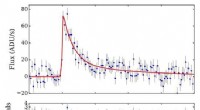
2. Detecting Transient Objects: The Roman Space Telescope is equipped with highly sensitive instruments that can detect faint and rapidly changing light sources in the sky. This capability allows astronomers to identify and study transient objects such as supernovae, novae, and other variable stars, providing valuable information about their properties and behaviors.
3. Exploring Galactic Structure: The distribution and properties of the flickering lights in the Milky Way can shed light on the structure and composition of our galaxy. By studying the spatial distribution and brightness of these events, astronomers can map the spiral arms, star-forming regions, and other features within the Milky Way, helping us understand its overall structure and evolution.
4. Probing Dark Matter: The flickering lights in the Milky Way can also be used to probe the existence and distribution of dark matter, a mysterious substance that makes up a large portion of the universe but cannot be directly observed. By measuring the gravitational effects of dark matter on the motion of stars and the occurrence of stellar explosions, astronomers can gain insights into the nature of this enigmatic matter.
5. Comparative Galactic Studies: Comparing the flickering lights observed in the Milky Way with those in other galaxies can provide valuable insights into the diversity and evolution of galaxies across the universe. Roman's observations will allow astronomers to study different types of galaxies and compare their star formation rates, stellar explosions, and other transient events, helping us understand the processes that shape galaxies.
Overall, NASA's Roman Space Telescope will enable astronomers to conduct detailed observations of the flickering lights in the Milky Way, providing a wealth of information about stellar evolution, transient objects, galactic structure, dark matter, and the comparative study of galaxies. By investigating these phenomena, Roman will deepen our understanding of the universe and the place of our own galaxy within it.