A new approach, proposed by a team of researchers, leverages data from the recently concluded Akatsuki mission, which was designed to study the atmosphere and surface of Venus. The team, led by Dr. Ayako Matsuyama of Tohoku University in Japan, focused on analyzing changes in the cloud structure above two prominent volcanic regions on Venus: the Ganiki Chasma rift zone and the Ovda Regio corona.
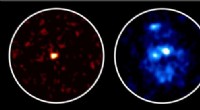
By utilizing high-resolution images captured by the Longwave Infrared Camera (LIR) onboard Akatsuki, the researchers examined the spatial and temporal variations in cloud patterns above these regions. They found that the clouds' brightness temperature, which is indicative of their altitude and density, exhibited significant variations on a timescale of hours to days.
These variations, characterized by localized brightenings and darkenings of the clouds, were interpreted as possible signatures of volcanic activity. According to the team, the variations could be explained by the injection of sulfur dioxide (SO2) gas into the atmosphere from volcanic eruptions. SO2 gas interacts with sunlight and contributes to the formation of sulfuric acid aerosols, which can modify the cloud properties and lead to the observed changes in brightness temperature.
Furthermore, the team utilized Akatsuki's Ultraviolet Imager (UVI) data to search for potential sulfur dioxide plumes associated with volcanic activity. While they did not detect any distinct plumes that could be unequivocally attributed to volcanic eruptions, they found several regions with enhanced sulfur dioxide concentrations that warrant further investigation.
The authors highlight that their approach of combining high-resolution infrared and ultraviolet observations from the Akatsuki mission provides new insights into the potential ongoing volcanic activity on Venus. Further observations and analyses are necessary to confirm the volcanic origin of the observed cloud variations and sulfur dioxide enhancements. Despite its challenges, the continued exploration of Venus, including through missions such as the upcoming VERITAS (Venus Emissivity, Radio Science, InSAR, Topography, and Spectroscopy) mission, holds promise for uncovering the secrets of this enigmatic planet.