Here are some key factors that make JWST capable of finding the first stars:
1. High Sensitivity: JWST is equipped with highly sensitive infrared instruments, such as the Near-Infrared Camera (NIRCam) and the Mid-Infrared Instrument (MIRI). These instruments allow it to detect faint signals from distant objects, including the faint light emitted by the first stars.
2. Wide Field of View: JWST has a wide field of view, which means it can observe a large area of the sky at once. This increases the chances of finding the first stars, which are expected to be spread out across the universe.
3. Observing the Early Universe: JWST is designed to observe the distant universe, including the era when the first stars formed. Its infrared capabilities allow it to see through the dust and gas that can obscure visible light, making it possible to probe the earliest stages of the universe's history.
4. Spectroscopy: JWST has spectroscopic capabilities, which allow it to analyze the light emitted by objects in great detail. This can provide valuable information about the composition, temperature, and other properties of the first stars, helping astronomers understand their nature.
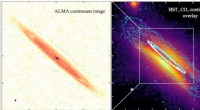
5. Synergy with Other Telescopes: JWST will work in conjunction with other telescopes, such as the Hubble Space Telescope (HST) and ground-based observatories. This multi-wavelength approach can provide a more comprehensive understanding of the first stars and their evolution.
While JWST has the potential to find the first stars, it's important to note that this is a challenging endeavor due to the extreme distances and faintness of these early objects. Nonetheless, JWST's advanced capabilities make it the most powerful tool astronomers have to explore the early universe and uncover the mysteries surrounding the formation of the first stars.