* Sunspot observations: Sunspots are dark spots on the surface of the Sun that are caused by strong magnetic fields. The number of sunspots varies over the course of the solar cycle, reaching a maximum around every 11 years. By observing sunspots, scientists can track the progress of the solar cycle.
* Solar flares: Solar flares are powerful bursts of energy that erupt from the Sun's surface. Flares can disrupt radio communications, damage satellites, and even cause power outages on Earth. The frequency of solar flares also varies over the course of the solar cycle, peaking around the same time as sunspot activity.
* Coronal mass ejections (CMEs): CMEs are large clouds of plasma that are ejected from the Sun's corona. CMEs can travel through space and interact with the Earth's magnetic field, causing geomagnetic storms. Geomagnetic storms can disrupt power grids, communications, and even navigation systems. The frequency of CMEs also varies over the course of the solar cycle, peaking around the same time as sunspot activity.
* Radio emissions: The Sun emits radio waves at a variety of frequencies. The intensity of these radio emissions varies over the course of the solar cycle, and scientists can use these variations to track the progress of the cycle.
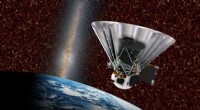
* Spacecraft observations: Spacecraft that orbit the Sun can provide valuable data about the solar cycle. These spacecraft can measure the Sun's magnetic field, temperature, and density. They can also observe solar flares and CMEs.
By combining all of these observations, scientists can get a comprehensive picture of the solar cycle and how it affects the Earth. This information is important for understanding space weather and its impact on our planet.
Here are some specific examples of how scientists around the world track the solar cycle:
* In the United States, the National Oceanic and Atmospheric Administration (NOAA) operates the Space Weather Prediction Center (SWPC). The SWPC monitors solar activity and issues warnings about space weather events that could affect Earth.
* In Europe, the European Space Agency (ESA) operates the Solar and Heliospheric Observatory (SOHO). SOHO is a spacecraft that orbits the Sun and provides continuous observations of the Sun's surface and atmosphere.
* In Japan, the National Astronomical Observatory of Japan (NAOJ) operates the Hinode satellite. Hinode is a spacecraft that studies the Sun's magnetic field and atmosphere.
* In China, the National Space Science Center (NSSC) operates the Advanced Space-based Solar Observatory (ASO-S). ASO-S is a spacecraft that studies the Sun's magnetic field and atmosphere.
These are just a few examples of the many organizations around the world that are involved in tracking the solar cycle. By working together, these organizations can help us to better understand the Sun and its impact on our planet.