1. Magnetic Carpet and Differential Rotation:
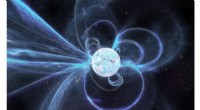
The sun's surface is adorned with a complex magnetic carpet, characterized by regions of intense magnetic fields called sunspots and less intense magnetic regions known as plage. These magnetic structures play a pivotal role in driving the sun's differential rotation. The rotation rate varies with solar latitude, with equatorial regions rotating faster than the polar regions. This non-uniform rotation is attributed to the interactions between the magnetic carpet and the underlying plasma.
2. Magnetic Reconnection and Coronal Heating:
Magnetic reconnection is a fundamental process in solar physics that occurs when oppositely oriented magnetic field lines interact and release enormous amounts of energy. This process is believed to be the primary driver of coronal heating, which results in the formation of the sun's outer atmosphere, the corona. The intense heat in the corona enables the plasma to overcome gravitational forces and stream outward, contributing to the solar wind.
3. Coronal Loops and Magnetic Arcades:
Magnetic structures in the sun's corona form vast arches called coronal loops. These loops are composed of plasma confined by strong magnetic fields. The interplay between magnetic reconnection and the dynamics of coronal loops leads to the formation of magnetic arcades, which are assemblies of coronal loops rooted in sunspot regions. These arcades play a crucial role in shaping the corona and driving its rotation.
4. Flux Transport and Meridional Circulation:
Magnetic flux, which represents the amount of magnetic field passing through a given area, is continuously transported across the sun's surface by meridional circulation, a large-scale convective motion. This transport of magnetic flux contributes to the evolution and rotation of the sun's magnetic carpet, influencing coronal dynamics and rotation patterns.
5. Role of Solar Flares and Prominences:
Solar flares and prominences are two significant phenomena that release stored magnetic energy in the sun's atmosphere. Flares are sudden and intense bursts of energy, while prominences are large, filament-like structures suspended above the sun's surface. These events can disrupt the magnetic structures and modify coronal rotation patterns, introducing additional complexity to the overall dynamics of the solar atmosphere.
Revealing the secrets of the sun's coronal rotation requires a multi-faceted approach, combining observations from space-based telescopes, numerical simulations, and theoretical modeling. By unraveling the intricate connections between magnetic structures and coronal rotation, scientists aim to improve space weather forecasting capabilities and gain a deeper understanding of the complex processes that shape our solar system.