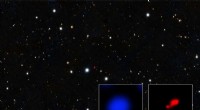
A new study of distant galaxies has revealed a conundrum that challenges our current understanding of how stars form. The research team, led by astronomers at the University of California, Berkeley, used the Atacama Large Millimeter/submillimeter Array (ALMA) to observe galaxies located more than 10 billion light-years away, when the universe was only a fraction of its current age.
Key Findings:
High Star Formation Rates: The distant galaxies showed unexpectedly high rates of star formation. These galaxies were producing new stars at a rate several hundred times higher than what is typically observed in nearby galaxies.
Massive Gas Reservoirs: The team discovered that the distant galaxies contained vast reservoirs of molecular gas, which serves as the raw material for star formation. However, the amount of gas appeared to be disproportionately small compared to the observed star formation rates.
Challenge to Standard Models: The combination of high star formation rates and limited gas reservoirs challenges current models of star formation. These models predict a more gradual and regulated process of star formation based on the availability of molecular gas.
Implications:
Formation of Early Galaxies: The study suggests that the processes of star formation in the early universe may have been more dynamic and diverse than previously thought. It implies that the physical conditions in these early galaxies were different and might require new theoretical models to explain the rapid formation of massive stars.
Reevaluating Star Formation Theories: The findings highlight the need for a deeper understanding of star formation physics and the role of gas dynamics, gravitational forces, and energy feedback in shaping the early galaxies.
Observational Techniques: The study demonstrates the power of new observational techniques, such as ALMA, in probing the hidden processes of star formation in distant galaxies, providing valuable data for researchers to refine their theoretical models.
Summary:
The study of distant galaxies using advanced observational facilities like ALMA is shedding new light on the complexities of star formation in the early universe. The unexpected observations challenge current star formation theories and call for further investigation into the physical processes shaping these distant galaxies. Future research will aim to unravel the precise mechanisms responsible for the high star formation rates and explore how galaxies evolve over cosmic time.