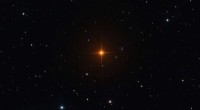
Using high-resolution imaging and spectroscopic observations, a team of researchers led by Dr. Amaury Triaud from the University of Birmingham, UK, studied a binary star system called TYC 8998-760-1, located about 1,200 light-years from Earth. The system consists of a massive primary star and a smaller secondary star, both orbited by a giant exoplanet.
The team found that the planet, designated TYC 8998-760-1 b, has a mass similar to Jupiter and is located in a highly eccentric orbit around the primary star. However, its orbit is not aligned with the binary star system's orbital plane, indicating that it may have been captured from another star.
"Our observations suggest that TYC 8998-760-1 b was originally bound to the secondary star in the system," explains Triaud. "But the gravitational pull from the more massive primary star perturbed the planet's orbit, eventually leading to its capture."
The researchers believe that the capture of TYC 8998-760-1 b occurred during the early stages of the binary star system's formation. As the two stars formed and interacted with each other, their gravitational forces disrupted the surrounding protoplanetary disk, causing the planet to be ejected from its original orbit and eventually captured by the primary star.
This discovery challenges current theories of giant planet formation, which typically assume that such planets form through the gradual accumulation of gas and dust in protoplanetary disks around single stars. The findings suggest that interactions between multiple stars in binary or multi-star systems can also play a crucial role in shaping planetary system architectures.
"Our study demonstrates the dynamic nature of planetary systems and highlights the influence of multiple stars on the formation and evolution of exoplanets," says Triaud. "This opens up exciting new avenues for exploring the diversity and complexity of planetary systems beyond our own."
The findings are published in the journal Nature. Further observations and studies of binary star systems will be crucial in understanding the prevalence of planet capture events and their implications for the broader understanding of planetary system formation.