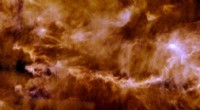
1. The Orion Bar Nebula: The Orion Bar is a giant region of ionized hydrogen gas within the Orion Nebula, home to active star formation. The Webb image exhibits dense knots and filaments where new stars are emerging, illuminated by a massive, highly energetic star nestled within.
2. NGC 346: A Spiral Galaxy: NGC 346, located in the constellation Cetus, is a barred spiral galaxy. Webb's infrared vision penetrated through the dust and gas, unveiling a prominent oval ring of hot, massive stars surrounding the galaxy's central black hole, as well as a vibrant core.
3. Stephan's Quintet: This peculiar galaxy group, previously captured in iconic Hubble images, now stands revealed with unprecedented clarity in Webb's observations. Stephan's Quintet is known for its dramatic interactions, collisions, and merging of galaxies, resulting in starbursts and tidal tails.
4. Westerlund 2: Star Cluster: Situated about 20,000 light-years from Earth in the Milky Way's Carina Nebula, Westerlund 2 is a young, compact cluster of stars. Webb's near-infrared camera unveiled details of a chaotic, bustling hub teeming with hundreds of thousands of stars, including some of the hottest and most luminous known to date.
5. The Carina Nebula's "Cosmic Cliff": This prominent feature of the Carina Nebula showcases the interplay of life and death in stellar evolution. The "Cosmic Cliff" presents an otherworldly landscape of towering pillars of gas and dust sculpted by outflows from massive stars nearby, while new stars are being born amidst the sculpted chaos.
Significance: These exquisite Webb images not only showcase the beauty and complexity of stellar nurseries and galaxy dynamics, but they also contribute significantly to astrophysical research. Scientists will analyze the data captured to deepen their understanding of star formation, stellar evolution, and the life cycles of galaxies, providing vital information about the cosmos and our place within it.