Neutron stars are extremely compact objects, with masses of about 1.4 to 2.5 times that of the Sun, but with diameters of only about 20 to 30 kilometers. This incredible density means that neutron stars have surface gravities that can be hundreds of billions of times that of Earth's gravity.
Neutron stars also have very strong magnetic fields, which can be trillions of times stronger than the Earth's magnetic field. These magnetic fields can accelerate charged particles near the star's surface to near the speed of light, creating a powerful beam of radiation known as a pulsar. Pulsars are one of the most important observational manifestations of neutron stars.
Neutron stars are also believed to be the sites of several astrophysical phenomena, such as:
- Glitches: Sudden increases in the rotational speed of neutron stars, possibly due to internal rearrangements within the star.
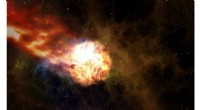
- Supernovae: Neutron stars can be the final fate of massive stars, undergoing a violent explosion known as a supernova when they reach the end of their life cycle.
- Black hole formation: If the mass of a neutron star exceeds a certain critical value (Tolman-Oppenheimer-Volkoff limit), it can collapse further under its gravity, forming a black hole.
- Neutron star mergers: When two neutron stars orbit around each other, they can gradually lose their orbital energy through the emission of gravitational waves. Eventually, they can merge together, producing a powerful burst of gravitational waves and other electromagnetic radiation.
Neutron stars are fascinating astronomical objects that play a crucial role in understanding the late stages of stellar evolution, the nature of dense matter, and the universe's dynamic processes.