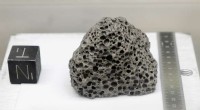
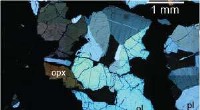
Sample Analysis: Studying lunar samples brought back by missions like Apollo and Luna programs provides direct access to the moon's geological materials. Scientists analyze the composition, age, and structure of these samples to learn about the moon's formation and evolution.
Remote Sensing: Telescopes and instruments onboard spacecraft and satellites enable remote sensing of the moon's surface and atmosphere. Observations in different wavelengths, such as visible light, infrared, and X-rays, reveal information about the moon's topography, mineralogy, and surface processes.
Crater Studies: The moon's surface is heavily cratered, and studying the distribution, size, and morphology of these craters provides insights into its impact history. Impact cratering is a significant process that has shaped the lunar landscape and offers clues about the timing, frequency, and sources of impacts.
Radiometric Dating: Scientists use radiometric dating techniques, such as potassium-argon and uranium-lead dating, to determine the ages of lunar rocks and minerals. By measuring the decay of radioactive elements within samples, scientists can constrain the age of different lunar features and events.
Geochemical Analyses: Studying the chemical composition of lunar materials helps scientists understand the origin and differentiation of the moon. Analyzing elements and isotopic ratios, including oxygen, silicon, and magnesium, provides information about the moon's internal structure and processes.
Geophysical Investigations: Geophysical techniques, such as seismology, gravity measurements, and magnetic field studies, provide information about the moon's interior, crustal thickness, and structure. Analyzing seismic data and gravitational anomalies helps scientists understand the moon's internal layering, density variations, and dynamic processes.
Numerical Modeling: Scientists use computer models and simulations to study the evolution of the moon over time. These models incorporate various factors, such as impact simulations, thermal histories, and orbital dynamics, to test hypotheses and make predictions about the moon's past and future.
By combining these methods and lines of evidence, scientists are able to piece together the complex history of the moon, including its formation from early planetary processes, its geological evolution, and its interaction with the Earth and the rest of the solar system.