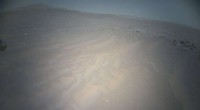
The far side of the moon is the side that is not visible from Earth. It is also called the "dark side" of the moon, although it is not actually dark. The far side of the moon is just as bright as the near side, but we cannot see it from Earth because the moon is tidally locked to our planet. This means that the same side of the moon always faces Earth.
Why is the far side moon important?
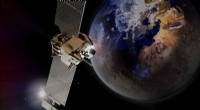
The far side of the moon is important for a number of reasons. First, it is a relatively unexplored region of the moon. Only a few spacecraft have ever landed on the far side, and we still know very little about its surface and composition. Second, the far side of the moon is a potential source of resources, such as helium-3, which could be used to generate energy. Third, the far side of the moon could be a potential location for a future human colony.
What have we discovered on the far side moon?
Here are some of the key discoveries that have been made on the far side moon:
* The surface of the far side moon is very different from the surface of the near side. The near side of the moon is covered in craters, while the far side is relatively smooth. This is because the far side of the moon has been less affected by impacts from asteroids and comets.
* The far side of the moon has a number of large craters, including the South Pole-Aitken basin, which is the largest impact crater in the solar system. The South Pole-Aitken basin is about 2,500 kilometers in diameter and 13 kilometers deep.
* The far side of the moon has a number of large basins, which are thought to be the result of volcanic eruptions. These basins are filled with lava, and they are some of the flattest and smoothest surfaces on the moon.
* The far side of the moon has a number of mountain ranges, which are thought to be the result of tectonic activity. These mountain ranges are typically about 1,000 kilometers long and 100 kilometers wide.
What are the future plans for the far side moon?
There are a number of future plans for the far side moon, including:
* Sending more spacecraft to the far side of the moon to study its surface and composition. This will help us to learn more about the history of the moon and its place in the solar system.
* Mining resources from the far side of the moon. Helium-3 is a potential source of energy, and it is thought to be abundant on the far side of the moon.
* Establishing a human colony on the far side of the moon. The far side of the moon could be a potential location for a future human colony, as it is relatively protected from radiation from Earth.
The far side of the moon is a fascinating and mysterious region of our solar system. With continued exploration, we will learn more about its history, composition, and potential for future resources and habitation.