Auroras are caused by the interaction of charged particles from the sun with the Earth's magnetic field. The particles are accelerated along the magnetic field lines towards the Earth's poles, where they collide with atoms and molecules in the atmosphere, causing them to emit light.
The new findings show that the auroras are created by a process called magnetic reconnection. This occurs when two magnetic field lines of opposite polarity come into contact and merge, releasing a burst of energy. The energy is then converted into light by the collision of the charged particles with the atoms and molecules in the atmosphere.
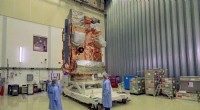
The team of physicists made their discovery using data from the European Space Agency's Swarm satellite mission. The mission consists of three satellites that measure the Earth's magnetic field. The data from the satellites showed that the auroras are created in regions where the magnetic field is strongest.
The findings provide new insights into the interaction between the Earth's magnetic field and the solar wind. They also have implications for understanding other space weather phenomena, such as geomagnetic storms.