Hubble Space Telescope:
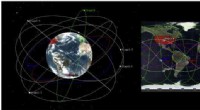
1. Orbiting Platform: HST is a space-based telescope that orbits Earth at an altitude of approximately 547 kilometers (340 miles). This placement above Earth's atmosphere provides it with a clear view of the cosmos, free from distortions caused by atmospheric turbulence.
2. High Resolution and Sensitivity: HST's location and advanced optics enable it to capture high-resolution, sharp images with exceptional sensitivity. It can detect faint objects and study distant galaxies, providing invaluable data for understanding the early universe and cosmic evolution.
3. Long-term Observations: HST can perform continuous observations for extended periods, allowing scientists to study celestial phenomena that change over time, such as supernovae, variable stars, and planetary weather patterns.
Balloon-Borne Experiments:
1. High-Altitude Platform: Balloon-borne experiments carry instruments into the stratosphere, typically at altitudes of 30-40 kilometers (19-25 miles). This altitude is high enough to minimize the effects of Earth's atmosphere while still being within reach of recovery systems.
2. Specific Scientific Objectives: Balloon experiments are often designed to address specific scientific questions or observe particular celestial objects. They can carry specialized instruments tailored to these objectives, such as telescopes optimized for infrared, ultraviolet, or X-ray observations.
3. Access to Unique Wavelengths: Some balloon-borne experiments can observe wavelengths that are absorbed or scattered by Earth's atmosphere, making them crucial for studying phenomena such as the cosmic microwave background (CMB) or high-energy astrophysical events.
4. Affordability and Flexibility: Balloon experiments are generally more cost-effective and have shorter lead times compared to space-based missions. This allows for more flexibility in testing new instruments, performing experiments, and iterating on scientific investigations.
While HST excels in long-term, high-resolution observations from space, balloon-borne experiments offer unique capabilities for specific scientific investigations, access to particular wavelengths, and affordability. Both platforms contribute to our understanding of the universe, complementing each other's strengths and addressing different aspects of astronomical research.