1. Galaxy Evolution: Roman will help astronomers study how galaxies form and evolve over time. By observing galaxies at different distances, researchers can effectively look back in time and trace their evolution. Roman's infrared capabilities will allow it to detect faint, obscured galaxies that are hidden from optical telescopes.
2. Star Formation: Roman will provide insights into the processes of star formation and the birth of new stars. It will enable astronomers to study the dense molecular clouds where stars are born, as well as the disks of material surrounding young stars. Roman's high sensitivity will allow it to detect faint stars and study their properties in detail.
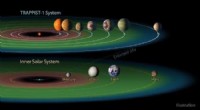
3. Exoplanets: Roman will contribute to the search for and study of exoplanets, planets that orbit stars other than our own. By measuring the tiny dips in brightness caused by planets passing in front of their host stars (known as transits), Roman can identify and characterize exoplanets. It will also help determine the composition and atmospheres of these distant worlds.
4. Black Holes and Active Galactic Nuclei (AGN): Roman will provide valuable observations of black holes and AGN, regions at the centers of galaxies where supermassive black holes are actively accreting matter. Roman's infrared capabilities will enable the study of the hot gas and dust around these black holes, as well as the jets and outflows launched from them.
5. Dark Matter and Dark Energy: Roman will play a role in investigating the mysterious dark matter and dark energy that make up a significant portion of the universe. By studying the distribution of galaxies and galaxy clusters, as well as measuring the expansion rate of the universe, Roman will help astronomers better understand these enigmatic components.
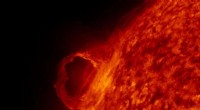
6. Time Domain Studies: Roman will conduct time-domain surveys, observing the sky repeatedly to detect transient events such as supernovae, tidal disruption events, and variable stars. These observations will provide insights into the dynamic nature of the universe and the processes that shape it.
Overall, the Roman Space Telescope's infrared observations and wide-field capabilities will enable astronomers to explore a vast range of cosmic phenomena, from the formation of galaxies to the nature of black holes, and contribute significantly to our understanding of the active cosmos.