GRBs are the brightest explosions in the universe, and are thought to be caused by the collapse of massive stars or the merger of neutron stars. They release enormous amounts of energy in the form of gamma rays, which are the highest-energy form of light.
GRB 221009A was detected by Fermi's Gamma-ray Burst Monitor (GBM). The GBM is a set of instruments that scans the entire sky for gamma-ray bursts. When it detects a burst, it triggers the Fermi's Large Area Telescope (LAT) to point towards the source of the burst and collect more detailed data.
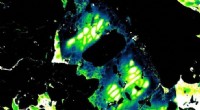
The LAT data showed that GRB 221009A was located in the constellation Hercules. It had a duration of about 1 second and released an estimated 10^54 ergs of energy. This is about 100 times more energy than the Sun will produce over its entire 10-billion-year lifetime.
The distance to GRB 221009A is not yet known, but it is likely to be located billions of light-years from Earth. This means that it occurred when the universe was only a few billion years old.
GRB 221009A is a very rare event. It is estimated that GRBs of this energy occur only once every 10,000 years. The detection of this GRB provides an important opportunity to study the most extreme events in the universe.
NASA's Fermi Gamma-ray Space Telescope is a mission that was launched in 2008. It is designed to study gamma-ray bursts and other high-energy phenomena in the universe. Fermi has detected over 3,000 GRBs since it was launched, and GRB 221009A is the most energetic burst that it has detected so far.