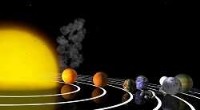
A team of scientists led by NASA has discovered that planets with oceans are likely to be common in the Milky Way galaxy. The team used data from NASA's Kepler space telescope to study the sizes, densities, and compositions of thousands of planets outside our solar system.
The scientists found that planets with a radius of about twice that of Earth and a density of about half that of Earth are the most common type of planet in the galaxy. These planets are likely to be rocky with a thin layer of ice or water on their surfaces. The team also found that planets with a radius of about four times that of Earth and a density of about twice that of Earth are the second most common type of planet in the galaxy. These planets are likely to be gas giants with a thick atmosphere of hydrogen and helium.
The scientists estimate that there are about 10 billion planets in the Milky Way galaxy with a radius of about twice that of Earth and a density of about half that of Earth. There are also about 1 billion planets in the Milky Way galaxy with a radius of about four times that of Earth and a density of about twice that of Earth.
The discovery of so many planets with oceans is significant because it increases the chances that life exists outside of our solar system. Life as we know it requires liquid water, so planets with oceans are the most likely places to find it.
The Kepler space telescope was launched in 2009 and has been used to study the sizes, densities, and compositions of thousands of planets outside our solar system. The Kepler space telescope has revolutionized our understanding of the diversity of planets in the galaxy and has increased the chances that life exists outside of our solar system.