The study's lead author, Dr. Rory Barnes of the University of Washington, said in a statement, "Our results suggest that the habitability of Earth is not just a matter of its distance from the sun or its size, but also of the dynamics of its orbit. This is an important discovery because it means that there could be many more planets in the universe that are capable of supporting life than we previously thought."
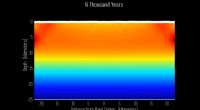
The study's findings are based on computer simulations that modeled the effects of Jupiter's orbit on Earth's climate. The simulations showed that Jupiter's elliptical orbit causes the sun's radiation to vary by about 1% over a period of about 100,000 years. This variation in radiation causes the Earth's climate to change, but not enough to make it uninhabitable. Instead, the changes in climate help to maintain the conditions necessary for life on Earth.
Dr. Barnes said, "Jupiter's elliptical orbit is a kind of 'Goldilocks' phenomenon. It's not too eccentric and not too circular. It's just right to create the variability in climate that is necessary for life on Earth."
The study's findings also have implications for the search for life on other planets. If Jupiter's orbit shape plays a key role in the habitability of Earth, then it is likely that other planets with elliptical orbits could also be habitable. This would greatly increase the number of potential homes for life in the universe.
Dr. Barnes said, "Our study suggests that there could be many more habitable planets in the universe than we previously thought. This is an exciting discovery because it means that the chances of finding life beyond Earth are much higher."