The experiment, named the "Droplet Formation and Evaporation in Microgravity (DropletFEM) Experiment," will be conducted aboard the International Space Station (ISS) by a team of researchers led by Prof. Dr.-Ing. Alexander Vogel from the University of Bremen in Germany. The DropletFEM project is supported by the German Aerospace Center (DLR) and the European Space Agency (ESA).
Understanding Droplet Behavior in Microgravity:
In space, the absence of buoyancy-driven convection creates a unique environment where droplets behave differently compared to their behavior on Earth. The DropletFEM experiment aims to investigate these differences and gain a deeper understanding of droplet dynamics under microgravity conditions.
The experiment involves observing and analyzing droplets of different liquids, including water, ethanol, and oils, as they are formed and manipulated inside a microfluidic chip. By precisely controlling the flow rates, temperatures, and other experimental parameters, scientists can capture high-resolution images and data to study droplet characteristics, such as size, shape, and velocity.
Implications for Science and Technology:
The knowledge gained from the DropletFEM experiment will contribute to advancing our understanding of fluid physics in microgravity and its impact on various scientific and technological applications:
Microfluidics: The study of droplet formation and behavior in microgravity can provide valuable insights for designing microfluidic devices used in fields like biotechnology, drug delivery, and chemical synthesis.
Combustion: Understanding how droplets behave in microgravity environments is crucial for optimizing combustion processes in space vehicles, reducing fuel consumption, and improving propulsion efficiency.
Spray Technology: The knowledge gained from studying droplet formation can contribute to the development of improved spray technologies used in industries such as agriculture, manufacturing, and fire suppression.
The DropletFEM experiment will provide critical data and insights that will further our understanding of droplet dynamics and their applications in space and terrestrial environments. The results obtained from this research will benefit scientific communities, industries, and space agencies involved in microfluidics, combustion, and spray technology.
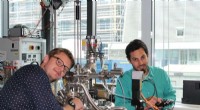
The experiment is currently undergoing preparation and testing at the University of Bremen's space technology laboratories. It is scheduled to be transported to the ISS in the coming months, where astronauts will conduct the experiments following the detailed protocol provided by the research team. The scientific community eagerly awaits the data and discoveries that the DropletFEM experiment will bring to the forefront of microgravity research.