Moons, on the other hand, can be much more forgiving. They can be located in orbits that are far from their star, and they can have atmospheres that are much thinner than those of planets. This means that moons can potentially support liquid water even in environments that would be too hostile for life on a planet.
As a result, moons are now considered to be one of the most promising places to search for extraterrestrial life. In recent years, several missions have been launched to explore moons in our solar system, and we're now learning more about these fascinating objects than ever before.
One of the most promising moons for habitability is Europa, a moon of Jupiter. Europa is thought to have a subsurface ocean of liquid water, and it also has a thin atmosphere that contains oxygen. This makes it a prime candidate for supporting life, and several missions are planned to explore Europa in more detail in the coming years.
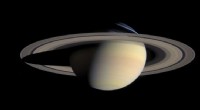
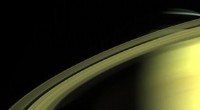
Another interesting moon is Enceladus, a moon of Saturn. Enceladus also has a subsurface ocean, and it also has geysers that喷发into space. These geysers contain organic molecules, which are the building blocks of life. This makes Enceladus another promising candidate for supporting life, and it's also a target for future exploration missions.
The search for habitable moons is still in its early stages, but it's already yielding some exciting results. By continuing to explore our solar system and beyond, we may one day find a moon that is home to extraterrestrial life.
In addition to the moons in our own solar system, there are also many moons that orbit other stars. These exomoons are much more difficult to study, but they could potentially be even more habitable than moons in our solar system. As our technology for studying exoplanets and moons improves, we may one day be able to learn more about these fascinating objects and their potential for supporting life.