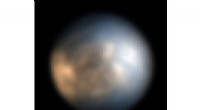
Europa, a moon of Jupiter, has long captivated the imaginations of scientists and science enthusiasts alike. With its icy surface and potentially habitable subsurface ocean, Europa is considered one of the most promising candidates for extraterrestrial life in our solar system. However, the extreme conditions on Europa, including its thick ice shell and harsh radiation environment, have made it challenging to explore and study.
Recent research suggests that iron snow, a phenomenon that occurs under the extreme conditions found on Europa, could hold clues to the potential habitability of the moon and the existence of life within its icy depths. Understanding iron snow and its implications for Europa's subsurface ocean is crucial in our quest to unravel the mysteries of this enigmatic moon.
What is Iron Snow?
Iron snow is a rare form of precipitation that occurs when iron particles in the atmosphere condense and fall as snowflakes. On Earth, iron snow is extremely rare and has only been observed in a few locations, such as near volcanoes or industrial areas with high iron concentrations. However, on Europa, iron snow is believed to be a common occurrence due to the presence of abundant iron in the moon's composition and the extreme temperatures and pressures found beneath its icy crust.
The formation of iron snow on Europa is a complex process influenced by several factors, including volcanic activity, hydrothermal vents, and the moon's interaction with Jupiter's magnetic field. Volcanic eruptions on Europa's surface release iron-rich materials into the atmosphere, which can condense and form iron clouds. These clouds can then be transported by winds and eventually fall as iron snow onto the surface or into the subsurface ocean.
Implications for Europa's Habitability
The presence of iron snow on Europa has significant implications for the moon's potential habitability and the search for life. Iron is an essential element for many biological processes, including oxygen transport and cellular respiration. The influx of iron-rich material from iron snow could provide a source of nutrients for any potential microbial life that may exist within Europa's subsurface ocean.
Furthermore, iron snow can act as a protective shield against the harsh radiation environment on Europa. The iron particles in the snow can absorb and scatter high-energy radiation, reducing its impact on the surface and potentially creating pockets of habitable environments within the ice. This shielding effect could allow for the survival of microorganisms that would otherwise be exposed to lethal levels of radiation.
Exploring Iron Snow on Europa
Exploring and studying iron snow on Europa is a challenging endeavor due to the moon's distance from Earth and its extreme environment. However, several missions and concepts have been proposed to investigate Europa's iron snow and its potential role in the moon's habitability.
One such mission is the Europa Clipper, a spacecraft currently under development by NASA. Scheduled to launch in the mid-2020s, the Europa Clipper will conduct multiple flybys of Europa to study its surface composition, investigate its interior structure, and search for signs of a subsurface ocean. The mission will also carry instruments capable of detecting and analyzing iron snow particles, providing valuable insights into their composition and distribution.
Another concept is the Europa Lander, a proposed mission that would land on the surface of Europa and conduct in-situ investigations. The lander could be equipped with instruments to analyze iron snow samples, search for biosignatures, and measure the physical and chemical properties of the ice shell. While the Europa Lander is still in the planning stages, it represents an ambitious step toward understanding the habitability of Europa and exploring the potential for life beyond Earth.
Conclusion
Iron snow, a unique phenomenon occurring on Europa, offers a glimpse into the moon's complex environment and its potential for harboring life. Understanding the formation, composition, and implications of iron snow is crucial for unraveling the mysteries of Europa's subsurface ocean and assessing its habitability. As future missions, such as the Europa Clipper and potentially the Europa Lander, venture into the depths of this icy world, we may come closer to answering the fundamental question of whether life exists beyond our planet.