Planetary geophysics uses a variety of techniques to study the interiors, surfaces, and atmospheres of planets and moons. These techniques include:
* Seismology: The study of earthquakes and other seismic waves to determine the structure of the interior of a planet or moon.
* Magnetometry: The study of magnetic fields to determine the structure of the interior of a planet or moon and the presence of a liquid core.
* Geodesy: The study of the shape and size of a planet or moon.
* Gravity: The study of the gravitational field of a planet or moon to determine the density of its interior and the distribution of mass.
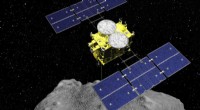
* Remote sensing: The use of instruments on spacecraft to study the surface and atmosphere of a planet or moon.
Planetary geophysics can teach us about finding life beyond Earth by helping us to understand the conditions that are necessary for life to exist. For example, we know that liquid water is essential for life, so we can use planetary geophysics to identify planets and moons that have liquid water on their surfaces or in their interiors. We can also use planetary geophysics to study the atmospheres of planets and moons to look for signs of gases that are associated with life, such as oxygen and methane.
Planetary geophysics is a rapidly growing field, and new discoveries are being made all the time. As we learn more about the planets and moons in our solar system, we will come closer to understanding the conditions that are necessary for life to exist beyond Earth.