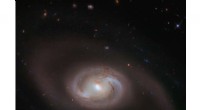
Hierarchical Galaxy Formation Model:
1. Dark Matter Halo: Satellite galaxies are believed to form within dark matter halos, which are vast regions of dark matter extending beyond the visible parts of galaxies. Dark matter is a mysterious type of matter that does not emit or interact with light but plays a crucial role in shaping the universe's structure.
2. Gravitational Collapse: Within dark matter halos, small density fluctuations can grow over time due to gravitational attraction. As these fluctuations amplify, they collapse under their own gravity, forming small clumps of gas and dark matter. These clumps are the seeds for future satellite galaxies.
3. Star Formation: Inside these collapsing clumps, conditions become suitable for star formation. As gas clouds condense, they fragment and form protostars, eventually leading to the birth of stars. The first stars in satellite galaxies are typically old and metal-poor compared to the stars in the host galaxy.
4. Merging and Accretion: As satellite galaxies grow, they may interact with each other and with the central host galaxy. These interactions can lead to mergers, where two or more galaxies combine to form a larger system. Accretion is another process by which satellite galaxies increase their mass by pulling in gas and debris from their surroundings.
5. Tidal Forces: The gravitational influence of the host galaxy exerts tidal forces on its satellite galaxies. These forces can distort and reshape their structures, leading to features like tidal tails and disturbed morphologies often seen in satellite galaxies.
6. Dark Matter Subhalos: Numerical simulations and observations suggest that most massive galaxies are embedded within larger dark matter halos containing multiple subhalos. Satellite galaxies are often associated with these subhalos, which represent the hierarchical structure of dark matter distribution.
7. Influence of the Host Galaxy: The properties and evolution of satellite galaxies are influenced by the host galaxy's gravitational potential, tidal forces, and interactions with the central galaxy's gas and stellar components. These interactions can shape the satellite galaxies' star formation rates, metallicities, and structural characteristics.
The formation of satellite galaxies is an ongoing process in the universe. By studying the properties and distributions of satellite galaxies, astronomers gain insights into the larger-scale structure and evolutionary history of the cosmos.