The IAU's definition states that a planet must meet three criteria:
- It must orbit the Sun.
- It must be spherical, or nearly so.
- It must be large enough to gravitationally clear the neighborhood around its orbit, also known as clearing the vicinity.
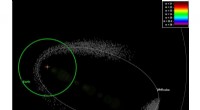
Pluto meets the first two criteria, but it does not satisfy the third. Its relatively small size and elliptical orbit mean that it has not cleared its neighborhood of other objects, such as the icy bodies in the Kuiper Belt.
The decision to reclassify Pluto as a dwarf planet was controversial among some scientists and members of the public who believed that Pluto should retain its status as a planet. However, the new definition was necessary to provide a clear and consistent classification system for all the objects in our solar system, and it has been widely accepted by the scientific community.