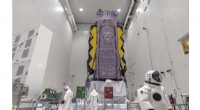
1. Powerful Telescope: A large telescope with high resolution is crucial for capturing detailed images of the region surrounding the black hole.
2. Long-Term Observations: Black hole photon rings are faint and require extended observation time to detect and study. Observations may span months or years.
3. Proper Wavelengths: The photon ring is best observed at specific wavelengths, which depend on the black hole's properties. Some telescopes are equipped to observe in multiple wavelengths, including X-ray and infrared.
4. Nulling Interferometry: This technique helps suppress the bright light coming directly from the black hole, enhancing the visibility of the dimmer photon ring.
5. Adaptive Optics: Adaptive optics systems help correct for distortions caused by Earth's atmosphere, improving image quality and reducing blurring effects.
6. Space-Based Telescopes: Some black holes may be easier to observe in the photon ring using telescopes positioned in space, where atmospheric interference is eliminated.
7. Theoretical Models and Simulations: Astronomers use theoretical models and simulations to predict the appearance and behavior of black holes and their photon rings. This knowledge guides observations and data interpretation.
8. Image Processing and Analysis: Captured images undergo rigorous processing and analysis to extract information about the black hole's properties and the photon ring's characteristics.
9. Collaborative Research: Observing black hole photon rings often involves collaborations between astronomers, physicists, and institutions to pool expertise and resources.
By combining these factors, astronomers can increase their chances of detecting and studying black hole photon rings, providing insights into the extreme physics near these enigmatic objects.