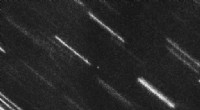
An object hurtling through our solar system that baffled astronomers for months is indeed an interstellar visitor, the first such object ever observed, scientists said on Tuesday.
The object, initially named A/2017 U1, was first spotted on Oct. 19, 2017, by astronomers using the University of Hawaii's Pan-STARRS1 telescope on Haleakala mountain.
At the time, astronomers were not sure if the object was an asteroid or a comet, but subsequent observations showed that it was a comet, said Karen Meech, an astronomer at the University of Hawaii's Institute for Astronomy.
"We have been observing this object for several months now and have been able to determine its orbit and composition," Meech said in a statement. "This is the first interstellar object ever observed, and it is a very exciting discovery."
The comet, which has been named C/2017 U1 (PANSTARRS), is about 120 feet (40 meters) in diameter and is made of ice and rock. It is traveling at a speed of about 15 miles per second (25 kilometers per second) and is expected to pass about 20 million miles (32 million kilometers) from Earth on Oct. 23, 2022.
Scientists believe that the comet was ejected from another star system millions of years ago and has been traveling through space until it reached our solar system.
"This is a unique opportunity to study a pristine object from another star system," said Paul Chodas, manager of NASA's Center for Near-Earth Object Studies. "We are eager to learn more about the composition and origin of this object."
Astronomers are planning to use a variety of telescopes to study the comet in the coming weeks and months. They hope to learn more about its composition, structure, and orbit.
The discovery of C/2017 U1 is a major breakthrough in astronomy. It is the first time that an interstellar object has ever been observed, and it provides scientists with a new opportunity to study objects from other star systems.