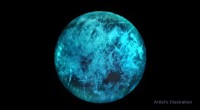
For decades, scientists have debated the nature of lightning on Venus, our closest planetary neighbor. Some studies presented evidence of lightning flashes, while others came up empty-handed. Now, a new study in Nature Geoscience has reignited the debate by providing compelling evidence that lightning might not be a significant phenomenon on Venus after all.
Why is Lightning Rare on Venus?
The presence or absence of lightning on Venus has implications for understanding the planet's atmosphere, cloud dynamics, and chemical composition. Lightning is commonly observed on Earth due to the presence of large ice particles and supercooled water droplets in thunderclouds, which collide and generate electrical charges.
However, Venus's atmosphere is vastly different from Earth's. It lacks liquid surface water, and the cloud layers consist primarily of sulfuric acid droplets and small aerosols. The atmosphere's temperature and pressure are also extreme, making it a challenging environment for electrical discharges.
The Evidence Against Lightning on Venus
The new study, led by researchers at the University of Oxford and the University of Edinburgh, analyzed data collected by the Venus Express spacecraft from 2006 to 2012. Using onboard instruments capable of detecting electrical activity, the spacecraft observed no lightning flashes during its entire mission.
The study further analyzed the physical conditions in Venus's clouds and found that the concentration of ice particles and the strength of the electric fields were too weak to support the development of lightning. In addition, the lack of strong updrafts and large ice crystals in Venus's clouds further inhibits the formation of thunderclouds capable of generating lightning discharges.
Implications for Venus's Atmosphere
The absence or scarcity of lightning on Venus has implications for understanding the planet's atmospheric processes. The study suggests that Venus's atmosphere is more quiescent and stable than previously thought. The absence of frequent electrical discharges also suggests that the planet's cloud layers might not be as turbulent as on Earth, affecting global circulation and energy transport within its atmosphere.
Future Research
Despite the compelling evidence presented in this study, the debate about lightning on Venus is likely to continue. Future missions to Venus, equipped with more advanced instruments and in-depth analysis techniques, might shed further light on the electrical behavior of this intriguing and mysterious world.